Guide
Are expandable prefab homes legal in the US?
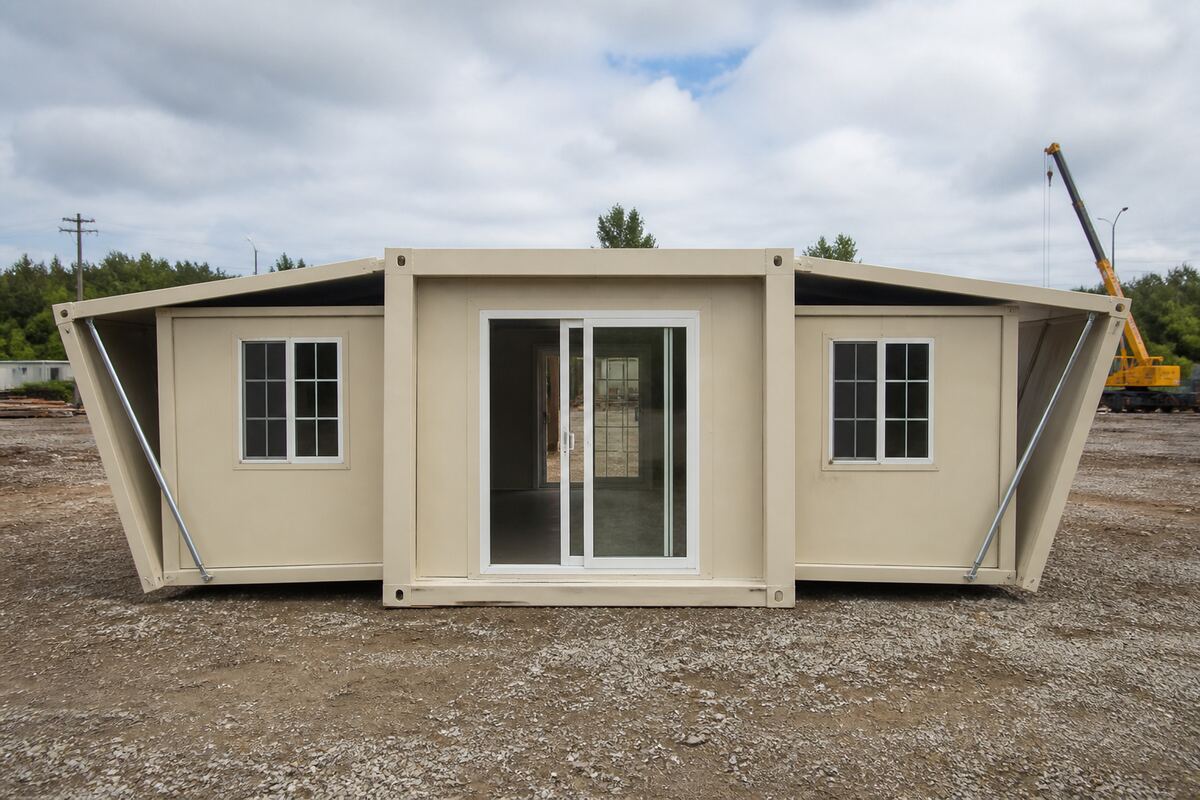
The $16,000 to $28,000 Amazon, Walmart, and Alibaba expandables ship as products. In most cities they are not legal dwellings. A CE sticker is not a HUD tag and not a state modular insignia. Legal occupancy needs a recognized code path plus local permits.
Can you legally live in an Amazon expandable house?
A habitable house in the United States needs a permit path your building official recognizes: International Residential Code (or state equivalent) for site-built and most modular, HUD Code for manufactured homes, or a park-model / RV standard if you are not creating real property. Marketplace expandables typically arrive with none of those. Some rural counties will allow them as sheds or offices. Most suburbs and HOAs will not allow them as housing.
This page is a warning guide, not a sales listing. We do not treat uncertified imports as catalog homes. For legal factory-built options see the collection, the ADU comparison, and modular versus manufactured versus site-built. Reddit threads on r/Homebuilding and r/AccessoryDwellings show repeated permit denials. Treat those as community signal, not a legal opinion for your county.
What legal paths actually exist?
Four labels show up on the same marketplace page. Only two commonly produce a US dwelling: HUD manufactured (federal label, 24 CFR 3280) and IRC or state modular (in-plant inspection plus insignia). Park model and RV paths produce recreation units. CE, ISO, and factory photos produce a shipping crate with plumbing holes. Fannie Mae B2-3-02 is relevant only if you somehow have an eligible HUD manufactured home. It does not bless a CE expandable.
| Path | What you should see | Typical use |
|---|---|---|
| IRC / state modular | State insignia, in-plant inspections | Abodu, Method |
| HUD manufactured | HUD label and data plate | Clayton CrossMod, Cavco Easton |
| Park model / RV | ANSI A119.5 or NFPA 1192 | Recreation, not a permanent ADU in most cities |
| Uncertified import | CE mark, no HUD, no state insignia | Amazon / Alibaba / Bastone-class expandables |
California Title 24 energy rules apply to permitted dwellings. An uncertified box that never becomes a dwelling never enters Title 24. That is not a shortcut. It means you cannot get a legal ADU certificate of occupancy. Check zoning before you pay a deposit.
What is the actual Amazon or Alibaba legal path?
Path A: use the unit as an unoccupied storage or shop building if the county allows it, with no sleeping, limited or no plumbing, and no rental. Path B: hire a US structural engineer to reverse-engineer the steel, produce stamped plans, and permit it as a site-built structure. Expect the engineer to reject unknown welds, unknown insulation, and 220V/50Hz electrical. Path C: buy a HUD or IRC factory product instead. Path B often costs more than Path C and still fails fire and energy review.
Import steps that listings omit: ocean freight, customs broker, ISF filing, inland trucking of oversize cargo, a crane that will lift a product with undocumented lift points, and an electrician who will not connect non-NRTL panels. None of that creates a HUD label. If a seller will not put the code path in the contract, walk.
What does the $20,000 sticker hide?
Ocean freight, duties, port fees, a crane, a pad, and an electrician who will touch non-US wiring routinely double or triple the listing. Insurance is often outbuilding-only. There is no conventional mortgage and almost no resale market. Run the numbers in the cost calculator. Site pad and driveway constraints are in the site preparation guide.
How is Boxabl different from a marketplace expandable?
The Boxabl Casita is a US-built foldable studio. Company and SEC figures in August 2026 cited 846 units built and 335 delivered. The $60,000 number is still a unit price. Turnkey packages near $150,000 are closer to a project budget, and site work can still rise. That is a different risk than a $20,000 import with no insignia. It is not a same-week house for 50,000 waitlist names. It is also not a two-bedroom ADU competitor to Abodu or Villa.
What should you do before you buy?
- Call the building department. Ask: dwelling or accessory structure?
- Demand the HUD label, state modular insignia, or stamped plan set in writing.
- Price utilities and crane access before the unit.
- Ask a local insurer if they will write a dwelling policy.
- If you need a legal ADU, start with catalog ADUs or Abodu versus Samara versus Studio Shed. If a ZIP-priced dealer quote looks cheap, read Home Nation factory-direct before you treat freight as a turnkey budget.
- If you still need human review of a listing PDF, use buyer help. We will tell you when we will not introduce you to a factory because the unit is not a dwelling.
FAQ
- Can an Amazon or Alibaba expandable house be a legal ADU?
- Only if that specific unit has a US-recognized code path (state modular insignia, HUD label, or stamped plans your building department will accept) and you clear local permits. The storefront name does not make it a dwelling.
- Is Boxabl the same as a $20,000 expandable container?
- No. Boxabl is a US factory product with a claimed California modular path. Most Amazon and Alibaba expandables ship with CE marks that US building departments do not treat as HUD or IRC approval.
- What does a $20,000 expandable listing actually cost installed?
- Freight, duties, crane, foundation, electrical upgrades, and permits commonly push a legal, occupiable project to $45,000 to $120,000-plus. Many units never receive a certificate of occupancy.
- Does a CE mark satisfy HUD or the IRC?
- No. CE is a European conformity mark. HUD manufactured homes need a HUD certification label under 24 CFR 3280. IRC modular homes need state in-plant inspection and an insignia. CE is not a substitute.
- Can I finance an Amazon expandable with a mortgage?
- Almost never. Conventional, FHA, and VA programs expect a recognized dwelling. Fannie Mae B2-3-02 covers eligible HUD manufactured housing, not uncertified imports. Cash, personal loans, or RV-style loans are the usual stack, and insurance may be outbuilding-only.
- Will a rural county allow one as a shed?
- Some counties allow uncertified steel boxes as storage or agricultural structures with limits on plumbing, sleeping, and rental. That is not a legal ADU and is not a path to a certificate of occupancy as a dwelling.
- What should I demand in writing before a deposit?
- The code path, the factory address, whether a US engineer will stamp the plans, who imports and warranties the unit, and a statement that the seller will refund if the building official rejects the dwelling classification.